Why You Should Assess the CFO Needs of Your Business
in Fractional CFO, CFO Services, Finance, Financial Leadership, Fractional CFO, Roles of a Fractional CFO, Strategic Planning, All Posts
Founders often ask: Is it time to bring in a CFO?
The answer depends on more than revenue, company size, or growth rate. Some companies reach significant revenue milestones with sound financial systems and experienced leadership. Others face financial challenges much earlier because their reporting, planning, and decision-making haven’t kept pace with the business.
Before hiring a full-time CFO, engaging a fractional CFO, or investing in additional financial support, business leaders should assess their current needs. The goal is to understand which financial capabilities the business requires, where the gaps exist, and how those gaps affect its ability to grow profitably.
TL;DR
-
Revenue alone doesn’t determine when a business needs a CFO. Financial complexity, reporting quality, and decision-making requirements matter more.
-
Identify gaps in financial reporting, strategic planning, cash flow forecasting, profitability analysis, and financial leadership before choosing a solution.
-
Financial gaps can lead to poor hiring decisions, eroding margins, cash flow challenges, and missed growth opportunities.
-
The right support may include stronger accounting systems, targeted financial advice, interim leadership, a fractional CFO, or a full-time CFO.
-
A CFO readiness assessment helps founders understand their financial gaps and determine which capabilities to prioritize.
Revenue Alone Doesn’t Determine When You Need a CFO
Revenue is an easy benchmark, but it doesn’t tell the whole story.
Consider two companies generating similar annual revenue. The first has predictable cash flow, reliable financial reporting, and a capable controller who manages day-to-day accounting. The second is growing rapidly, yet its founder still approves every significant expense and makes hiring decisions using financial reports that are several months old.
Although both companies generate similar revenue, the second may need CFO-level support much sooner.
The difference lies in financial complexity, the quality of available information, and the decisions leadership must make. As a business grows, its financial requirements evolve. Decisions about pricing, hiring, expansion, capital allocation, and profitability demand more than accurate accounting records. They require forward-looking financial insight.
A CFO needs assessment helps business leaders determine whether their current financial capabilities support these decisions or whether they need additional expertise.
Instead of asking, “Are we big enough to need a CFO?” founders can ask a more useful question: “Do we have the financial insight and leadership needed to make our next set of business decisions confidently?”
Identify Your Financial Gaps Before Choosing a Solution
Not every business that needs financial support needs a CFO. The right solution depends on the company’s specific challenges.
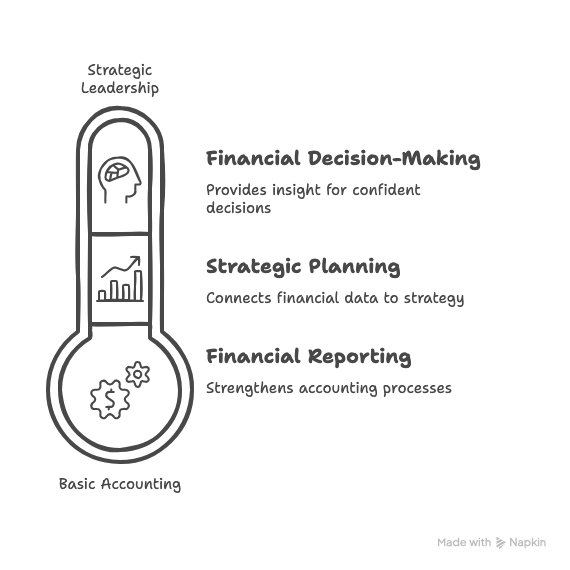
Financial reporting and infrastructure
Some businesses struggle with the fundamentals of financial management. Their month-end close takes too long, they monitor cash flow by checking bank balances, or their financial reports don’t show profitability by customer, product, or service line.
These gaps make it difficult to understand business performance and anticipate financial challenges.
In such cases, the immediate priority may be to strengthen accounting processes, improve management reporting, establish a rolling cash flow forecast, or develop a financial model that reflects how the business generates revenue and incurs costs.
Strategic financial planning
Other businesses have reliable accounting systems but lack the financial insight needed to guide growth.
Leaders may be considering a new market, evaluating a major investment, adjusting prices, or expanding their workforce without understanding the financial implications of those decisions.
CFO-level support can help connect financial data to business strategy. Through forecasting, scenario analysis, and profitability assessments, financial leaders can evaluate assumptions, compare alternatives, and understand the potential risks and returns before committing resources.
Financial decision-making and leadership
In some companies, the founder remains the only person who understands the business’s financial position or feels comfortable making major financial decisions.
This arrangement may work early on, but it can become a bottleneck as the company grows. Decisions take longer, financial responsibilities become concentrated, and other leaders lack the information they need to act independently.
The solution may involve better reporting, clearer financial responsibilities, and more structured decision-making processes, supported by the appropriate level of financial leadership.
Understand the Hidden Cost of Financial Gaps
Financial management gaps rarely appear as a single, obvious expense. Instead, their costs accumulate through decisions made without reliable information.
A company might hire ahead of its cash capacity, keep offering an unprofitable service, underestimate customer acquisition costs, or expand into a new market without understanding the investment needed to earn a reasonable return.
Individually, these decisions may appear manageable. Collectively, they can erode margins, constrain cash flow, and limit the company’s ability to invest in sustainable growth.
Weak financial infrastructure can also create problems when a business seeks financing, prepares for a leadership transition, or considers a potential sale. If producing reliable financial statements, analyzing customer-level profitability, or developing a forward-looking financial model requires months of cleanup, the company may face unnecessary delays and additional costs.
These challenges highlight an important distinction: financial information should not simply explain what has already happened. It should help leaders understand what is likely to happen next and what they can do about it.
A CFO needs assessment helps identify where these gaps exist and which capabilities deserve attention first.
Choose the Right Level of CFO Support
Once the business understands its financial gaps, it can make a more informed decision about the support it needs.
A company with unreliable reporting may need to strengthen its accounting infrastructure before investing in advanced financial planning. Another business may already have strong accounting processes but require strategic guidance on pricing, capital allocation, or expansion.
Companies navigating leadership transitions or significant operational changes may need interim financial leadership. Those facing a specific challenge, such as evaluating an acquisition or developing a financial model, may benefit from a targeted engagement.
For businesses that need ongoing strategic guidance but aren’t ready for a full-time CFO, a fractional CFO can offer a practical alternative.
No single solution fits every business because companies operate at different growth stages, face different challenges, and have different financial resources.
The goal is to avoid two costly mistakes: investing in support the business doesn’t yet need or delaying the financial expertise needed to make better decisions.
Assess Your CFO Needs Before Making a Decision
CFO readiness isn’t a pass-or-fail test. It is an opportunity to understand whether your company’s financial capabilities align with its current operations, growth ambitions, and decision-making requirements.
At CFO Pro+Analytics, our 11-question CFO readiness assessment examines five dimensions of your company’s financial operations and business context. It provides an initial view of where financial leadership may be needed and what support may be appropriate.
The assessment helps business leaders identify potential gaps and determine where further attention may be warranted. It is a starting point for a more informed conversation, rather than a substitute for a detailed review of your company’s financial circumstances.
Assessing your needs before choosing a solution can help you allocate resources more effectively, address financial weaknesses before they become costly, and make strategic decisions with greater confidence.
Frequently Asked Questions
1. When should a business consider hiring a CFO?
A business should consider CFO support when its financial complexity exceeds its current capabilities. Common signs include unpredictable cash flow, limited financial forecasting, difficulty measuring profitability, and uncertainty about major investments or growth decisions. The right time depends on the company’s financial needs, not revenue alone.
2. What is the difference between a full-time CFO and a fractional CFO?
A full-time CFO provides dedicated financial leadership and oversees the company’s financial strategy, planning, and performance. A fractional CFO provides similar strategic expertise part-time or on a flexible basis, making it a practical option for businesses that need experienced financial guidance without committing to a full-time executive. The best choice depends on the company’s complexity, budget, and ongoing support requirements.
3. What does a CFO readiness assessment help a business determine?
A CFO readiness assessment helps business leaders identify gaps in their financial operations, reporting, planning, and decision-making. It provides an initial indication of where stronger financial leadership may be needed and whether the business could benefit from improved accounting processes, targeted financial advice, or ongoing CFO support. The results provide a starting point for determining the next steps.
Ready to understand where your business stands?
Assess your CFO needs in 5-minutes