Beyond Fulfillment: Mastering Mid-Market Finance
in Strategy, Financial Leadership, Fractional CFO, All Posts
In the fast-paced world of mid-market growth, founders often find themselves caught between basic bookkeeping and the need for high-level financial strategy. On this episode of Beyond Fulfillment, host Dave sits down with Salvatore Tirabassi, Founder and Managing Director of CFO Pro+Analytics.
They dive deep into the transition from growth equity to entrepreneurship, the “indispensable” AI tools currently reshaping the back office, and why fractional expertise is the secret weapon for companies scaling toward a sale.
Table of Contents
The Spark: Spotting a Real Gap in the Mid-Market
Dave: Before you were the guy helping CEOs navigate massive financial decisions, what was that early spark where you realized you were built for the world of business and entrepreneurship?
Salvatore Tirabassi: For me, it came on pretty gradually. I’d been around entrepreneurs and emerging businesses for a long time as a growth equity investor—basically investing in new ideas and concepts, growing them, and then having them be built into larger companies that could be sold or go public. I had a lot of familiarity with it. When you’re on the investing side of the table, you can relate a lot to what the entrepreneurs are doing, but actually being in that seat is a different mindset.
The spark for me was that I really saw a need in the marketplace based on conversations I was having with entrepreneurs who needed services in the financial aspects of their business that I could help them with. I had all this experience and could build a whole packaged methodology around it—a way of doing it that’s cost-effective and gives them good value. Once I figured out that was a thing people wanted to spend money on, I jumped into the entrepreneur seat and went with my gut on decisions about how I was going to guide this thing, build my lead flow. I knew the product had a market, and it was a question of getting leads in, closing them, and scaling. The spark really was knowing I had a product and a service that people wanted to buy and that I could package in the right way.
From Growth Equity Investor to Operating CFO to Founder
Dave: You had a corporate career as an actual CFO for a high-growth company. Is that right?
Salvatore Tirabassi: Coming out of growth equity, I had the opportunity to switch gears and go into an operating role. I had a few different opportunities, and the one I jumped into was as a CFO of a company that was high-growth—or wanted to be high-growth. I was the CFO of that business over a period where it grew from roughly 80 people to about a thousand people.
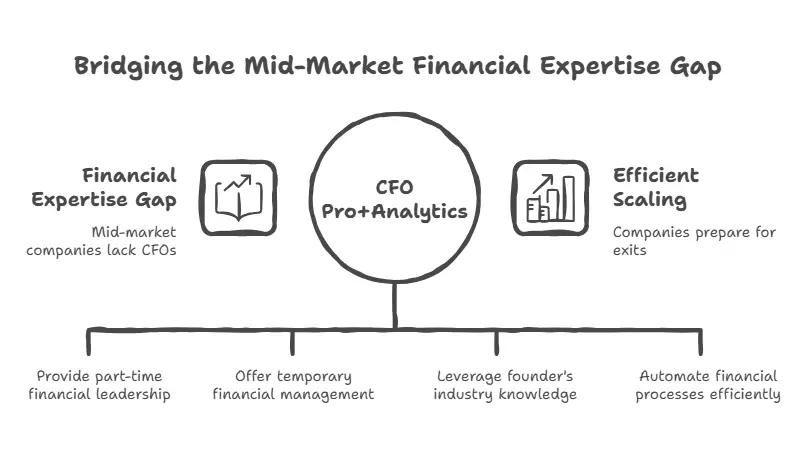
Then I packaged all that knowhow with everything I learned as an investor to basically say: for a founder or family-owned business with 10 to 100 employees, $3 million to $50 million of revenue, what’s the CFO function we can deliver as a service for them, so they don’t really have to think about how they’re going to get that expertise?
All of that knowhow going into the product came from the whole span of my career—even going back to when I came out of college and was a management consultant. All those skills are packaged in how we deliver the service. You pay attention to project management, deliverables, knowing how to ask the right questions, knowing how to analyze things and present them back to entrepreneurs in ways that are efficient—that don’t require them to spend a lot of time understanding what you’re showing them. You get their feedback so you can produce a high-quality interaction that helps them push their business forward.
The Service Pitch: All the Meat, None of the Fat
Salvatore Tirabassi: When I talk to people who hear the elevator pitch on what I do, the way I describe it sometimes is: we’re a CFO service that’s super high-quality for less than it would cost to hire and build a team full-time. So you’re getting all the meat without any of the fat. Efficiency and giving them building blocks that are proven and aren’t being experimented with are key aspects of that. The ability to operate with these building blocks that you know work comes from years of experience.
If I had gone to be an entrepreneur in a healthcare business or something like that, the knowhow I would apply there is quite different—it’d be more generic. It just so happens that in my business it’s specifically tied to expertise I have, and that funnels into what we do today in our services.
Building the Back-Office Infrastructure First
Dave: What did the process of building this look like once you got going?
Salvatore Tirabassi: I really flipped into: how do I build a business model on the back end that minimizes the amount of work the back of the house requires, so I can keep going quickly with customer acquisition and service delivery? At the beginning it was just me. Within 60 or 90 days I already had two other people working with me because I had that much demand. But I focused on infrastructure in the back of the house.
I spent a weekend going through six different CRM systems—they all let you have free trials—figuring out which ones out of the box required the least amount of work but covered the biggest span of events in my customer’s journey. The work we do with clients is confidential in nature. Do I want to be dragging and dropping and emailing and thinking about e-signatures for non-disclosure agreements? No. So a key part of my CRM is: the minute I put a lead in, I press a button and it kicks off a fully filled-out confidentiality agreement that I can sign and the prospect can sign. It’s all part of the stream.
I wanted all these little pieces of the back of the house to be very efficient so I didn’t have to think about them. I didn’t want to track down 10 emails for confidentiality agreements with 10 prospects. I wanted it running in the background, and I didn’t want to hire an assistant to think about it.
One of the first permanent people I brought on was a bookkeeper, because I didn’t want to deal with my own accounting entries. By minimizing time in the back of the house, I had a lot of time to work on the front end—building out a website, creating my own newsletter with bi-weekly content, and getting my LinkedIn profile to represent me as a thought leader for entrepreneurs. To do that efficiently, I used AI and hired offshore subcontractors who could manage the website, edit my content, and keep the LinkedIn on a calendar representing me in the market with original ideas coming out of the business. The leads were coming in through referrals, and I had a process for handling that—leveraging my CRM and a good calendaring system. It was all about maximizing the amount of time I could spend with clients and prospects.
Indispensable Tools for B2B Service Founders
Salvatore Tirabassi: An AI meeting recorder is indispensable for me. I don’t show up to meetings anymore and take notes—I just listen and talk, and my meeting recorder captures everything. Sometimes people don’t want the recorder, in which case I switch to paper or typing on my computer. But 99% of the time they’re okay with it, and we capture all the notes. That gives me the ability to move much more quickly. That’s a key tool for a consultant.
My view is that automation—and especially now with AI, but just automation in general—and the variety of tools available take a little bit of planning up front, but once you’re locked and loaded, it pays dividends forever. I have probably a dozen small subscriptions that are equivalent to having an assistant. There’s almost no work for an assistant to do around me because I have all these little tools that take care of all that stuff.
Dave: Any couple of your favorites?
Salvatore Tirabassi: Some people have been teasing me about this one, but I just started using an application called Calendar Bridge. The main reason I use it is that it’s an AI assistant that has its own email address, and I copy it whenever somebody’s asking me to set up a meeting. A lot of people send out Calendly links, and I have those as well, but I find with clients and prospects, saying “look at my calendar and find a time” is a little impersonal.
Calendar Bridge has an AI assistant. I send an email—“Hey Dave, thanks so much for the Beyond Fulfillment interview. Let’s connect again in six weeks and catch up on that topic.” The assistant reads the email, knows who you are, knows what my calendar is, and goes six weeks out and sends you an email: “Hey Dave, I just got the email from Sal. Here’s what his schedule looks like six weeks from now. Pick one of these times and I’ll send you an invite.” It’s literally like a human doing it, but it’s all AI. I’m a big fan. I use it every day.
I also use Claude a lot for anything that requires extensive writing—reviewing meeting notes, preparing proposals, drafting blog posts. It really expedites the amount of written work I can do in a short period. I review all the stuff myself, but if I need a draft or an outline or even a meeting agenda, I go in there. Those would be two. I have lots more.
Where AI Actually Helps in Finance Today
Dave: Let’s talk about AI in financial reporting and the CFO realm.
Salvatore Tirabassi: It’s still really early days for things like accounting entries. Where AI comes in handy now is more on the financial reporting side. It’s a little more well-baked because the AI will read the results and come up with its own analysis or discussion. That saves some time—it gives you a couple of highlights you can quickly put together. But in general, we’re still in the early innings.
The key thing: AI doesn’t really have real-world context. It might learn some of that over time, but the real-world context for the business might be much more important than what the numbers are actually saying. For example, you might do a financial report that says, “Oh, we spent $100,000 more on marketing this month.” That may look like a big increase to an AI agent that doesn’t understand the context. But you as the CFO will know—yeah, of course, this is the month we changed the marketing strategy and we’re going to do all these new things. The AI doesn’t have awareness of that when it’s operating inside its little box. You as the CFO need to provide the highest-level interpretation and explain that to the client.
Where I find on the finance side is more valuable these days are automation tools. If a client has a marketing database, and you connect it to the financial information, you can produce reports that discuss the effectiveness of marketing or the effectiveness of the sales team. Automations and connections between these databases are more off-the-shelf now. You don’t need to be a developer. Something like Zapier—especially with its new AI mode where it’ll try to build the whole connection for you—really takes a lot of the tech out of it and allows you as a solo or under-resourced finance person to connect information better. That’s a more important step for us right now compared to just using the AI.
Scaling the Firm: Adding Interim CFO as a Second Product
Dave: How has the company grown?
Salvatore Tirabassi: I’ve been doing it for a couple of years. We added 10 clients last year. We’re at the beginning of 2026, so that was my second full year. I added five finance team members to the firm working on a variety of clients. I grew my LinkedIn followers from about 2,500 to 7,500—much bigger audience to review our content. We launched a new product segment as well.
The service I started the business with is what’s generally in the market called fractional CFO. We’re your permanent part-time finance function. We get paid a flat monthly fee and deliver services month in, month out. We’re there to act like a full-time resource—you’re not counting hours or worrying about what the bill will be at the end of the month—but on a part-time basis.
In the middle of last year, through two different relationships, we were asked to do interim CFO work. Interim CFO work is full-time or almost full-time on a temporary basis, going in to solve problems. So we launched that new product set. Now we have team members working on the permanent part-time stuff as fractionals, and they dip into temporary full-time work when it becomes available. Usually we put two people on the temporary full-time assignments to help the client get the wheel spinning, because they usually need to fix things quickly and sometimes they’re really big problems that people are sweating over.
My goal this year is to add 14 clients—about 40% contract growth over last year. I just started a new marketing strategy to bring in names that aren’t part of my referral network.
Why Founder Selling Matters in the Early Years
Dave: How important is it for you as the founder to be selling versus outsourcing that?
Salvatore Tirabassi: I think that’s really important. There are people on my team who really want to get into the selling process. I’ve got a call right after this where someone on my team has two new leads they brought in and want to be part of the sale process. At some point you can start training people on selling, but it’s important for the founder at the beginning to be heavily involved.
You really need to understand why the client is buying and what their pain points are, especially in our business—every client’s different, so you’re customizing a service for them. Showing up to the sales meetings with a full capability of knowledge that makes the client feel comfortable that you can really get this done—that’s another reason the founder is important at these early stages. At a certain point, you have to scale out of that and introduce new faces into the selling process. I’m just attempting that this year for the first time.
Who CFO Pro+Analytics Serves and How to Reach Out
Dave: Sal, talk specifically about what problems you solve and how people can find you.
Salvatore Tirabassi: We work with companies in the $3 million to $50 million revenue range—typically 10 to 200 employees, sometimes 300. We do two main things. If you’re a family or founder-owned business, you don’t really have a real finance function, you may not understand how to use a finance function—you’ve thought of it as bookkeeping, bank reconciliations, tax accounting—but you’re realizing you’re always struggling with knowing where your cash is. Profits don’t equal cash flow. You want to grow but don’t know where to invest. You may need to raise capital—debt or equity. You may have to do business transformation in your company and want financial expertise on board. That’s where we come in as your permanent part-time CFO and help you navigate those things.
For all of our clients, we’re probably the number-one advisor to the owner or CEO once we step in, because we see everything, we hear everything, we have honest conversations, and we’re really there to help them make their businesses better.
The other aspect: founders and families who really want to get ready to sell the company. In that case it’s not so much a permanent part-time role—it might be a temporary full-time or near full-time role where they want financial expertise to help them get things in order, so when they go sell the business, everything looks great and is understandable to potential buyers. I can’t understate that. When you go sell a business, if you can show up to your meetings with really nice-looking financials, with a story behind it, and the ability to answer 99% of the questions without going back to figure it out, you come across as a top-tier management team that buyers really want to invest in or buy from.
There’s a whole other set of things we do under interim work that’s more problem-solving—may not be related to a sale.
Dave: If people want to find you online, what’s the best way?
Salvatore Tirabassi: cfoproanalytics.com. You can schedule an appointment right there if you want to have a quick chat. You can find me on LinkedIn—just look up Salvatore Tirabassi and you’ll find me. You can pretty easily find me by putting my name in a Google search.
We love talking to owners and founders of businesses. We get a lot out of the initial conversations and we like to give a lot of free advice. We don’t show up to meetings thinking we’re there to close a sale. We’re really there to listen and show them we have knowledge and knowhow that can be beneficial. We start advising them from the first discussion, and if there’s something for us to do with them on an ongoing basis for fees, great.

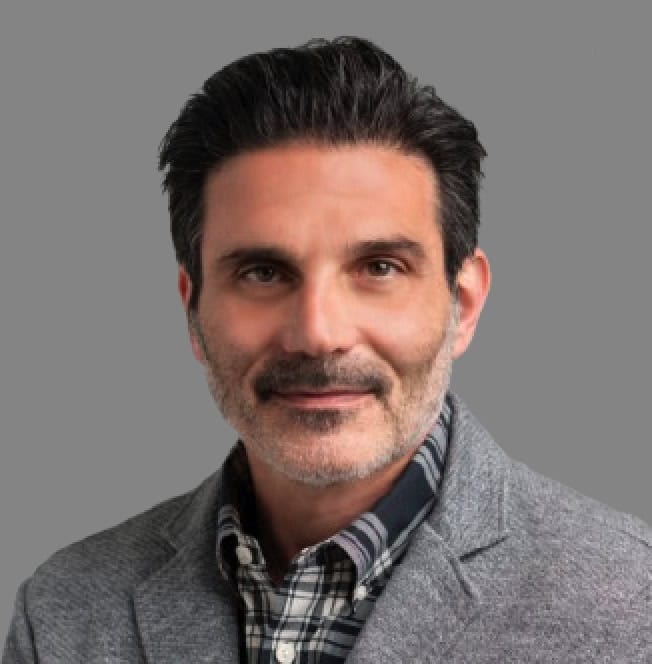
Salvatore Tirabassi is the Founder of CFOPro+Analytics, providing fractional CFO services to growth-stage companies. Based in New York, he leverages over 24 years of experience in venture capital and strategic finance to help entrepreneurs master cash flow, unit economics, and equity value creation through data-driven financial clarity.
Assess your CFO needs in 5-minutes
For more on this topic, read our month-end close optimization with a fractional CFO and QuickBooks to NetSuite when to upgrade your accounting.