Practical Strategies to Improve Cash Flow For Small – Medium Sized Businesses
in Cash Flow Management, CFO, Finance, Fractional CFO, Strategy, Cash Flow Management, Fractional CFO Services, Outsourced CFO services, saas fractional cfo, All Posts
Meta reported $164.5 billion in revenue in 2024, with a net profit of $62.4 billion, a 59% increase from the previous year. Clearly, Meta is getting its cash flow management right. The company operates a free-for-user model but generates most of its revenue through digital advertising due to its enormous social media reach through Facebook, Instagram, WhatsApp, and Threads. Meta also generates additional cash flow from sales of its Oculus VR headsets and is poised for future income from massive AI investments.
Founder-owned and small businesses don’t have the luxury of such massive product success, but on a smaller scale, with effective tools and management, they must continue to tinker with ways to improve their business cash flow.
From our perspective as a Fractional CFO company, in this article, we offer practical strategies businesses can use to improve their cash flow.
Cash flow is the lifeblood of any business, and every business needs a sustainable cash flow to survive and thrive. Therefore, businesses must think creatively about sustaining existing cash flow and generating more income. Cash flow keeps a business operation running smoothly, employees paid, and supports growth initiatives. Here are some short—and long-term strategies for improving business cash flow.
Cash Flow Strategy: Short-term Strategies
- Cut Unnecessary Expenses This is the first line of action for businesses to improve short-term cash flow; cash flow refers to the movement of money in and out of the business. Similar to personal expenses, there are areas that a business can trim down to free up some extra cash, even if it’s only temporarily, which supports healthy cash flow and financial stability. Businesses can limit spending on non-essential items and embrace some initiatives to conserve cash. Simple Google searches can come up with a variety of alternatives to existing services you pay for at a lower cost. For example, just make sure to thoroughly research the changes in suppliers, as unreliable vendors are never worth the discount
- Reduce Inventory Level Businesses could apply the Just-in-time methodology popularized by Toyota in the 1970s to minimize excess stock and avoid having excess cash tied up in inventory. Small businesses could also consider using inventory management software that enhances their management capabilities to manage inventory efficiently for optimal ordering. Check out the QuickBooks App Store for inexpensive inventory modules to help you achieve results. SOS Inventory and Katana are two examples of such plugins for QuickBooks.
- Improved Accounting System An efficient accounting system will help a business keep adequate records of inflows and outflows, including actual cash and cash equivalents, giving businesses a bird’s eye view of their finances. It will also allow them to understand the nitty-gritty of finances and check for leakages. We are big fans of QuickBooks Online because it is cost-effective, and the QuickBooks App Store has many inexpensive additions. Cash Flow Frog is an app that you might find helpful for weekly cash flow planning and analysis.
- Block Financial Leakages A leaking boat would sail nowhere, just as a business with financial leakages will continue to sink. Businesses, with the aid of a trustworthy Fractional CFO, should continually identify cash leakages and block them as soon as possible. Cash leakages could be caused by overpayment, fraud, unused or underutilized subscriptions, unnecessary security deposits, and poor project time tracking. For security deposits, for example, consider putting up a letter of credit instead of cash. This way, you can keep the cash for your own growth.
- Optimize invoicing processes. Implement efficient invoicing and follow-up systems for timely payments for customers. A good CRM with invoicing capabilities can help you do this. A smoother payment process helps accelerate customer payments and encourages prompt payments. For example, service businesses could use the invoicing capabilities of HoneyBook, which tracks invoices, sends reminders, and makes billing more fluid. QuickBooks is also great for this. Just remember, systems like Honeybook and QuickBooks charge very high fees for payments you receive, but you can work around this by instructing customers to make payments using their bank’s ACH services.
Long-Term Strategies
I. Strategic Financial Leadership Through Fractional CFO Services for Effective Cash Flow Management
Small businesses can access enterprise-grade financial leadership without enterprise-level costs through long-term cash flow management strategies designed to support business growth. For example, one of our clients implemented sophisticated forecasting systems that improved working capital efficiency by 40%, improving cash flow stability and supporting stronger capital management without additional funding. Another manufacturing client optimized their supply chain costs through advanced analytics, saving $2M annually.
II. Data-Driven Pricing Optimization
Modern pricing strategies require sophisticated analysis. A specialty food manufacturer we worked with implemented dynamic pricing analytics, which improved margins by 25% while growing market share, strengthening data-driven decision making and improving financial reporting visibility. Starbucks demonstrates this concept well, using data analytics to adjust pricing based on location, demand patterns, and customer preferences.
III. Strategic Revenue Diversification
Revenue diversification must be strategic and measurable. One professional services client leveraged their expertise to create a training division, generating 30% additional revenue with minimal investment. Consider how Peloton expanded from hardware to subscription content, creating multiple revenue streams from its core customer base to increase cash flow and strengthen the company’s cash position.
IV. Building Sustainable Recurring Revenue
Implementing recurring revenue models requires sophisticated systems and analytics. We helped a commercial cleaning business transition to a subscription model, increasing predictable monthly revenue by 40%, so predictable revenue supports steady cash flow and the company’s cash flow needs. DocuSign exemplifies this approach, transforming document signing into a recurring revenue platform.
V. ROI-Focused Marketing Investment
Modern marketing requires precise measurement and optimization. Using our analytics platform, a direct-to-consumer client reduced customer acquisition costs by 30% while increasing lifetime value, and disciplined allocation improves operational efficiency and informs investment decisions. Consider how Warby Parker used data-driven marketing to disrupt the eyewear industry, achieving remarkable growth through carefully measured customer acquisition strategies.
Each strategy builds on proven financial leadership principles, implemented through sophisticated yet practical systems scaled for growing businesses. The key is combining enterprise-grade financial expertise with hands-on execution tailored to your business needs for effective financial management and a broader capital strategy.
Case Study: Tech Startup’s Cash Flow Transformation
Background
A tech startup specializing in software development was experiencing rapid growth. However, this expansion brought significant cash flow challenges, and managing cash flow was becoming harder as the company scaled. The company struggled to manage its finances effectively while trying to scale operations. Furthermore, delayed payments from clients and rising operational costs compounded the issue, creating cash flow problems that threatened positive cash flow and day-to-day operations, leading to uncertainty about funding future projects and underscoring the need for a cash reserve to protect the business’s financial health during growth.
The Challenge: Cash Flow Problems
The startup’s leadership recognized that they needed expert financial guidance but could not afford a full-time CFO. So, they engaged a fractional CFO at a rate they could afford, with expertise sufficient to navigate their troubled waters. The goal was to optimize cash flow and build robust cash management practices. This Fractional CFO became a part-time member of the CEO’s trusted executive team, ensuring a strong relationship to help guide the business.
To address these issues, the Fractional CFO began by thoroughly analyzing the company’s financial situation, including its financial systems and financial operations, with a focus on getting up-to-date information.
Implementation of Strategies
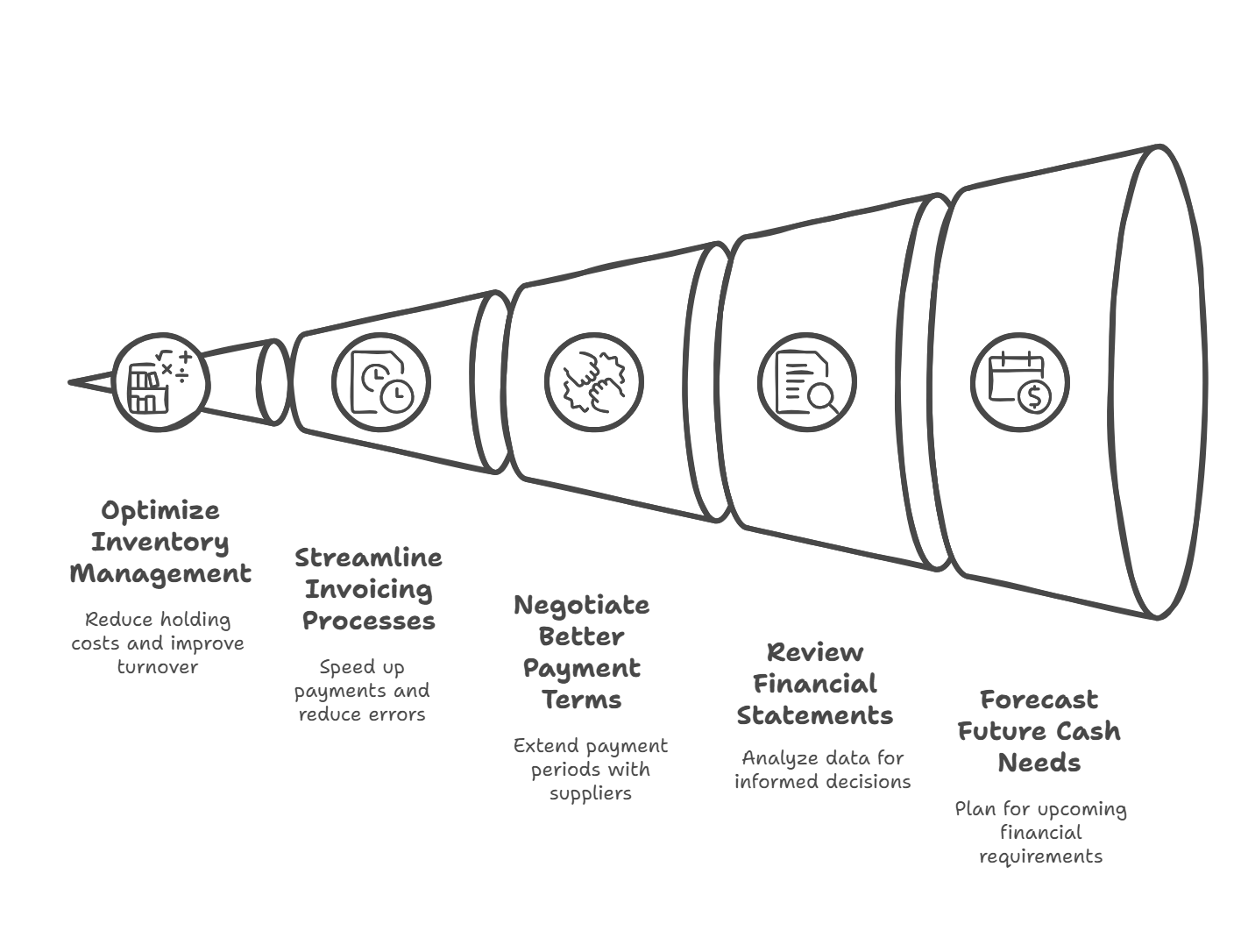
- The Fractional CFO implemented a 13-week cash flow forecasting model that tracked cash inflows, cash outflows, and net cash flow so leadership could see how much cash would be available. This model provided visibility into potential cash shortfalls and helped the team make informed decisions about spending and investments.
- The CFO revamped the accounts receivable process by introducing automated invoicing systems, electronic payments, and establishing clear payment terms to enhance cash flow management. The startup significantly improved its collection rates by offering early payment discounts and tightening credit terms for clients.
- The Fractional CFO was negotiating payment terms with key vendors to secure favorable payment terms, manage payables strategically, and improve accounts payable timing, allowing the startup more time to manage its cash outflows effectively. This strategy enabled the company to retain more cash on hand while still meeting its obligations and paying vendors on time without unnecessary strain.
- A comprehensive review of operating expenses was conducted, identifying areas where costs could be reduced to enhance cash flow without impacting service quality. This included renegotiating contracts with service providers and eliminating non-essential expenditures.
- The CFO established regular financial review meetings with the leadership team to monitor cash flow performance against forecasts. These meetings facilitated ongoing discussions about financial health, highlighted cash flow trends, and supported data-backed adjustments to strategies as needed.
Results Achieved
Within just a few months of engaging the Fractional CFO, the tech startup experienced remarkable improvements in its cash flow situation:
- 30% Improvement in Cash Flow: The implementation of effective cash flow forecasting and streamlined accounts receivable processes strengthened the company’s cash flow and produced a stronger cash position with a significant increase in available cash.
- Enhanced Financial Clarity: Leadership gained better visibility into their financial performance, enabling them to make informed decisions about future investments and growth initiatives, with clearer visibility also supporting better net income analysis alongside actual cash performance.
- Sustained Growth: With improved cash flow management, the startup was able to fund new projects without relying on external financing, including financing cash flow from new debt or compromising operational stability.
These improvements also created more financial flexibility to meet debt obligations and support future capital investments.
Frequently Asked Questions
- What specific strategies does a Fractional CFO use to improve cash flow? A fractional CFO employs various strategies tailored to a company’s unique financial situation. Key strategies include cash flow forecasting, optimizing working capital, expense management, and using cash flow statements to monitor liquidity; effective cash flow management helps maintain steady cash flow and avoid negative cash flow.
- How does a Fractional CFO help with accounts receivable management? Fractional CFOs are crucial in improving accounts receivable management by streamlining invoicing processes, establishing clear payment terms, and monitoring collections, which creates more money coming in and supports healthy operating cash flow.
- What are the benefits of hiring a Fractional CFO compared to a full-time CFO? Hiring a Fractional CFO offers several advantages over hiring a full-time CFO, especially for small to medium-sized enterprises. These include cost-effectiveness, flexibility, and access to diverse expertise. Stronger oversight can also improve the company’s financial strength through better debt management and capital planning.
is a fractional CFO and financial forecasting expert who helps growing businesses build sophisticated financial models that drive strategic decisions. With expertise in integrating operational data into financial planning, he specializes in creating 3-statement forecasts that serve multiple business functions from budgeting to investor relations. Connect with Salvatore at info@cfoproanalytics.com.
For more on this topic, read our cash conversion cycle for CPG brands a full guide and cash flow forecasting for retail-heavy CPG companies.