How Does a Fractional CFO Help an Architecture Firm Expand Into Construction?
in Fractional CFO, Uncategorized, Financial Leadership, Fractional CFO Services, Roles of a Fractional CFO, Strategic Planning, All Posts
Cutler Architects is making that move, and we are the financial team helping them do it.
TL;DR: Cutler Architects is an established residential architecture firm with deep expertise in modular and prefabricated design. CFO Pro+Analytics is advising the firm on growth strategy, the acquisition of a construction company, and the build-out of the combined business. Greg Klein, a homebuilding CFO with more than two decades in the industry, leads the advisory work. We also serve as a financial partner to the CEO as the strategy moves from plan to execution.
Who Is Cutler Architects?
Douglas Cutler founded the firm in 1987. Residential architecture has been the center of the practice since the beginning. The firm serves clients across Fairfield County, Connecticut, Westchester County, New York, and Palm Beach County, Florida.
Douglas Cutler is a distinguished residential architect and a nationally recognized expert in modular design. That expertise shows in the portfolio. It includes expansive residential estates, pre-designed single-family homes for developers, multifamily buildings, second-story additions, and accessory dwelling units. The work has appeared in The New York Times, HGTV, Better Homes & Gardens, Greenwich Magazine, and Westport Magazine.
The firm entered a new chapter in 2024. Jason Zoss became managing partner, bringing 20 years of experience across architecture, construction management, and real estate development. Zachary Trippodo was promoted to senior associate. The firm also partners with Park Shadow Associates, which creates contemporary walkable villages within commuting distance of New York City.
A firm with that history already sees the full life of a project. Design is only the first step. The logical question is why it should not own more of the build.
Why Does Moving Into Construction Change the Financial Model?
An architecture firm earns fees, while a builder carries risk.
Design fees arrive on a predictable schedule against a defined scope. Construction revenue arrives in draws, while costs arrive first. Labor, materials, trade partners, and factory deposits all have to be funded before the client pays. A prefabricated model sharpens the issue. Factory production requires early commitments, so working capital goes out the door months before a home is delivered.
The firm is not asking whether it can build. It is asking what building does to cash, margin, and risk.
Those questions belong to the CFO seat. They are also the questions most owners try to answer with a bank balance and instinct.
What Is Our Role at Cutler Architects?
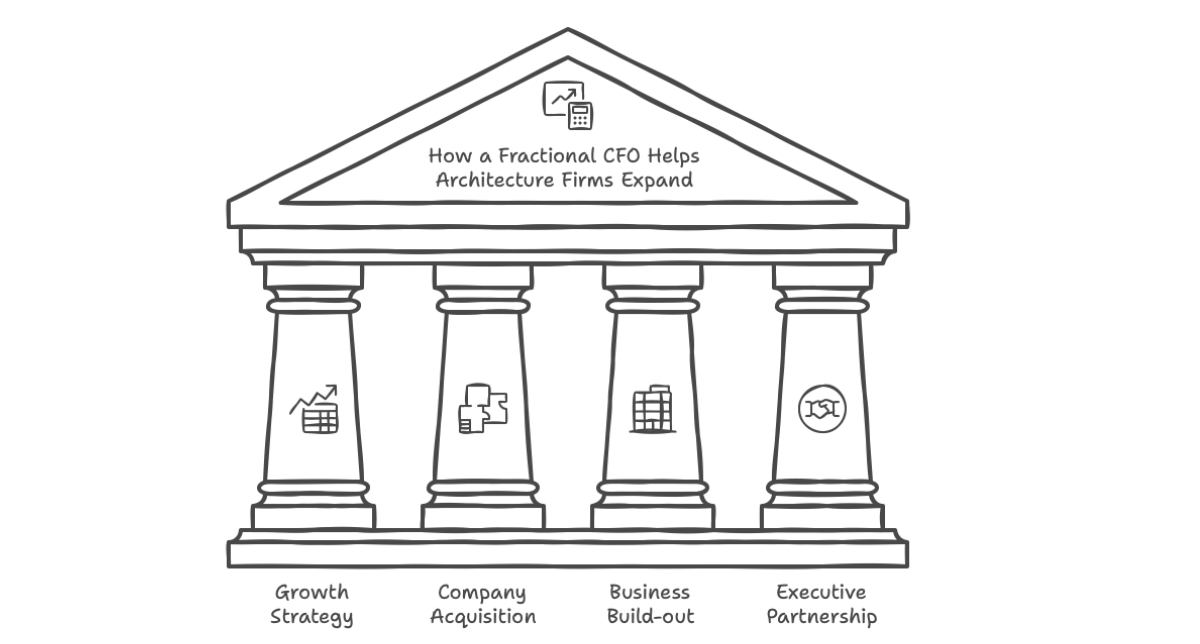
We work on three fronts at once.
Growth strategy. We built a driver-based model of the expanded business. It connects project volume, average contract value, factory and field capacity, payment timing, and overhead. Leadership can test a decision before making it. What happens to cash if three projects start in the same quarter? What margin does a modular estate need to carry its working capital? Where does the build business break even?
Acquisition of a construction company. Buying a builder is faster than building one, and riskier. We are advising on target criteria, valuation, diligence, and deal structure. The central issue is quality of earnings. Construction businesses can show healthy revenue while hiding thin job margins and unfinished work. We examine job-level profitability, backlog quality, and the commitments that come with the company. The goal is to buy a business whose real earnings match its reported earnings.
CEO partnership for execution. A strategy only matters if it runs. We meet regularly with the CEO to turn the plan into decisions. We track what changed in the numbers, what needs attention, and which tradeoffs come next. The CEO gets a thinking partner who owns the financial side of every major call.
Why Is Greg Klein the Right Advisor?
We matched this engagement to the person who has lived it.
Greg Klein spent more than two decades in homebuilding, from startups to multinational, publicly traded companies. A decade in consumer and industrial manufacturing came before that. His career follows a clear path through some of the best-known names in the industry:
- Finance Manager at NVR
- Director of Finance at Meritage Homes
- Manager of Purchasing and Finance at Clayton Properties
- VP Finance at Century Communities
- CFO at Harpeth Valley Homes
That path matters for Cutler for three reasons.
- First, Greg understands construction economics from the inside. He has built budgets for homes, not just reviewed them. He knows where margin leaks between the estimate and the final invoice.
- Second, his Clayton role combined purchasing and finance. In prefabricated construction, procurement and cash are the same problem. Material costs, supplier terms, and production commitments decide whether a project makes money.
- Third, he has grown with organizations. He moved from finance manager to CFO and took on more complexity at each step. That is the experience a firm needs when it is adding a whole new business line.
Greg is a non-practicing CPA who began his career at a Big 4 firm. He holds an MBA in Finance from Indiana University and a B.S. in Accounting from The University of Akron. He is a longstanding member of the Financial Executives Networking Group.
His working belief is: financial success starts with understanding the core business process.
He does not advise from a spreadsheet alone. He learns how the work gets done, then builds the finance function around it.
What Does Success Look Like?
The measure is not the number of reports produced. It is the quality of the decisions made.
For Cutler, success means leadership knows the margin on every project before it starts. Cash needs are visible months ahead. The acquisition target is priced on real earnings. The combined design and build business runs on one financial picture instead of two.
A firm that designs beautiful homes and builds them well controls its own quality, schedule, and economics. Getting there takes a financial plan as carefully engineered as the homes themselves.
Frequently Asked Questions
When should an architecture firm add construction?
When it can fund the working capital and manage the risk. Construction brings larger revenue and thinner margins. A forecast of cash, margin by project, and capacity should come before any decision to build or buy.
Why would a firm buy a construction company instead of starting one?
An acquisition brings crews, trade relationships, licenses, and a backlog on day one. It also brings inherited risk. A quality of earnings review separates real profit from reported profit before the deal closes.
What does a fractional CFO do for a company in growth mode?
A fractional CFO builds the forecast, manages cash, evaluates acquisitions, and works alongside the CEO on major decisions. The company gets senior financial leadership matched to its needs without a full-time executive salary.

Assess your CFO needs in 5-minutes